
The Priestly Blessing: Full Text, Meaning, and Liturgical Use
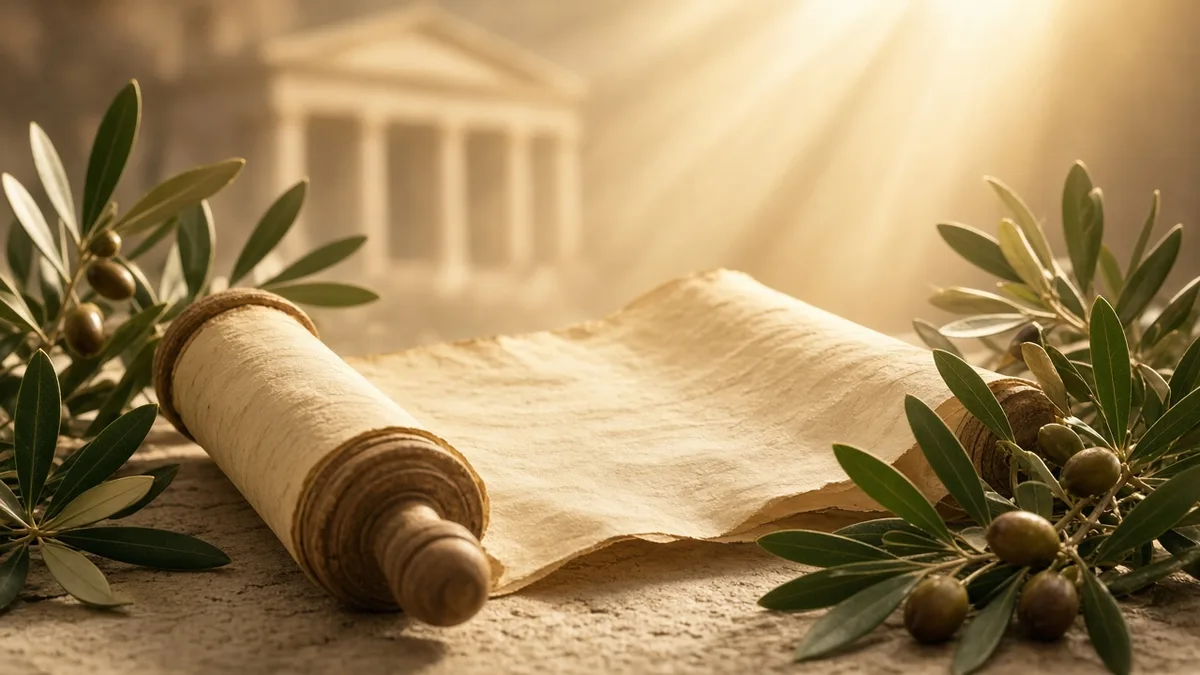
The Priestly Blessing is a threefold benediction from Numbers 6:24-26 in which God commands Moses to instruct Aaron and his sons to bless the people of Israel with these words: “The Lord bless you and keep you; the Lord make his face shine upon you and be gracious to you; the Lord lift up his countenance upon you and give you peace.” It remains a central blessing in both Jewish and Christian worship today.
What Are the Words of the Priestly Blessing?
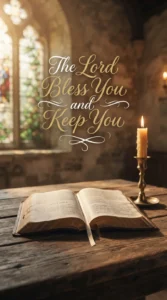
The Priestly Blessing — also called the Aaronic Blessing — is a three-line prayer recorded in the Book of Numbers. God gave these exact words to Moses, who passed them to Aaron and his sons, the priests of Israel.
The Lord bless you and keep you;
the Lord make his face shine upon you and be gracious to you;
the Lord lift up his countenance upon you and give you peace.
— Numbers 6:24-26 (NRSV)
The blessing uses the word “Lord” three times, once in each line. That triple repetition is not accidental. It gives the prayer a rhythm that has carried through three thousand years of spoken worship. The structure is simple: each line asks for God’s attention and then names what flows from it — protection, grace, and peace.
Different Bible translations and church traditions use slightly different wording. Some say “grant you peace” instead of “give you peace.” Some use “thee” and “thou” instead of “you.” The meaning does not change, but the exact words you need depend on where and how you will use them. The section on USA church traditions below sets out the main versions used in British worship.
Where Does the Priestly Blessing Come From in the Bible?

The blessing comes from Numbers 6:22-27. The full passage includes God’s command to Moses, which frames the blessing itself:
Printable Scripture tools
Memorize verses from “Where Does the Priestly Blessing Come From in the Bible?”
Verse cards and journals matched to the Scripture focus in this section.
The Lord spoke to Moses, saying: Speak to Aaron and his sons, saying, Thus you shall bless the Israelites: You shall say to them,
The Lord bless you and keep you;
the Lord make his face to shine upon you, and be gracious to you;
the Lord lift up his countenance upon you, and give you peace.
So they shall put my name on the Israelites, and I will bless them.
— Numbers 6:22-27 (NRSV)
Verse 27 is important. It tells us that when the priests speak these words, God himself blesses the people. The priests are not the source of the blessing — they are the channel. God says “I will bless them.” The blessing is divine in origin and in effect.
The passage sits in Parshat Naso, the 35th weekly portion of the Torah. It follows the laws of the Nazirite and the dedication of the Tabernacle.
Is This the Oldest Text in the Bible?
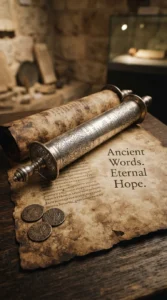
The words of the Priestly Blessing are the oldest surviving passage from the Hebrew Bible that we can hold in our hands.
In 1979, archaeologists excavating a burial cave at Ketef Hinnom, just outside the walls of Jerusalem’s Old City, found two tiny silver scrolls. When unrolled and deciphered, the scrolls revealed an abbreviated version of the Priestly Blessing. They date to roughly 600 BCE — the late First Temple period.
These silver amulets predate the Dead Sea Scrolls by about 400 years. They show that the words of Numbers 6 were already treasured, worn on the body for protection, and passed down with care long before the text of the Hebrew Bible was standardised.
For more day-specific messages, read Friday prayer guide.
What Is the Priestly Blessing in USA Church Traditions?
The version of the Priestly Blessing you hear on a Sunday morning depends on which church you attend. The Church of England, the Roman Catholic Church in England and Wales, and traditionalist Anglican parishes each use a slightly different authorised text. If you are preparing a service bulletin, you need the exact wording your tradition uses.
| Church Tradition | Source | Wording |
| Church of England (modern) | Common Worship (2000) | The Lord bless you and keep you; the Lord make his face to shine upon you and be gracious to you; the Lord lift up his countenance upon you and give you peace. |
| Church of England (traditional) | Book of Common Prayer (1662) | The Lord bless thee, and keep thee; the Lord make his face to shine upon thee, and be gracious unto thee; the Lord lift up his countenance upon thee, and give thee peace, both now and evermore. |
| Roman Catholic (England & Wales) | Roman Missal, Concluding Rite | May the Lord bless you and keep you; may the Lord make his face shine upon you and be gracious to you; may the Lord look upon you kindly and give you peace. |
| Roman Catholic (Scripture reading) | Jerusalem Bible / New Jerusalem Bible | May the Lord bless you and keep you. May the Lord let his face shine on you and be gracious to you. May the Lord uncover his face to you and bring you peace. |
In Common Worship, the blessing is authorised for use at the conclusion of Holy Communion, Morning Prayer, and Evening Prayer.
“You” or “Us”? Who Says What?
A practical point that sometimes causes confusion: when a priest or bishop pronounces the blessing in a service, the words are “May the Lord bless you.” When a lay person leads a service and uses this blessing, the correct form is “May the Lord bless us.”
This is not about one form being friendlier than the other. The distinction reflects sacramental theology. In Catholic and Anglican understanding, the ordained priest speaks the blessing in the person of Christ, mediating God’s blessing to the congregation. A lay leader prays alongside the people, asking God to bless everyone present, themselves included. Both forms are correct in their proper setting. The mistake is using one where the other belongs.
How Is the Priestly Blessing Used in Jewish Worship?
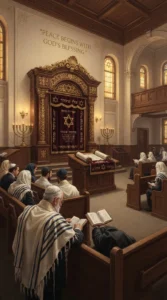
In Jewish tradition, the Priestly Blessing is called Birkat Kohanim — the Blessing of the Priests. It has been recited in synagogues and in the Temple before them for over two and a half millennia.
Who Can Give the Birkat Kohanim?
Only Kohanim — Jewish men aged 13 or older who are direct patrilineal descendants of Aaron, the first High Priest — may perform the blessing in a synagogue. A minyan, a quorum of ten Jewish adults, must be present.
Jewish law sets out specific conditions that disqualify a Kohen from giving the blessing. These include being under the influence of alcohol, having a severe speech impediment, being blind, having taken a human life, having married a divorced woman, or being in the initial mourning period after the death of a close relative. If a Kohen cannot or does not wish to participate, he must leave the synagogue for the duration of the blessing.
The chazzan (cantor) recites the blessing word by word, and the Kohanim repeat each word after him. The congregation responds “Amen” after each of the three lines. This prompting practice ensures that no Kohen stumbles over the sacred words.
When Is the Blessing Given?
In Israel, the Birkat Kohanim is performed every day during the morning service (Shacharit), and again during the additional service (Musaf) on days that include one. On Yom Kippur, it is also given during the closing service (Ne’ila).
In the diaspora, Ashkenazi communities typically perform the blessing only on festivals — Pesach, Shavuot, Sukkot, Rosh Hashanah, and Yom Kippur. This custom follows a ruling by the Remoh (Rabbi Moses Isserles), who taught that the Kohanim must bless the people “with joy,” and that such joy could only be guaranteed on the biblical festivals. ] Sephardi congregations in the diaspora often perform it daily, as in Israel.
How Do the Kohanim Hold Their Hands?
The hand gesture used during the blessing is one of the most distinctive physical actions in Jewish liturgy.
The Kohanim remove their shoes and walk to the area in front of the Torah ark. They cover their heads and hands with their tallit (prayer shawl). They then raise both hands with palms facing downward, fingers spread in a specific configuration that forms the Hebrew letter Shin (שׁ). The four fingers on each hand are split into two pairs, creating five spaces — between the ring and middle finger, between the index finger and thumb, and the space above or below where the two thumbs touch at the knuckle.
This gesture is called nesiat kapayim — the raising of the hands. The Shin shape symbolises Shaddai, a name for the Almighty.
Here is what you would notice if you were sitting in the congregation: the Kohanim ascend the platform. The room quietens. The cantor’s voice begins, slow and melodic. The Kohanim repeat each word, their shapes draped in white, their hands extended toward you though you cannot see them — they are under the tallit. Around you, people cover their heads with their own prayer shawls or turn their gaze to the floor. Some hold their children close under the tallit with them. There is a sense that something weighty is happening, that the space between the raised hands and the bowed heads has become charged.
Jewish tradition teaches that during the blessing, the Shekhinah — the Divine Presence — rests on the hands of the Kohanim. Out of respect, the congregation does not look directly at the hands.
The Priestly Blessing at Home
Jewish parents bless their children with these words every Friday night before the Shabbat meal. The parent places a hand on the child’s head and recites the blessing. For boys, the blessing is often prefaced with a prayer that God make the child like Ephraim and Manasseh, the sons of Joseph. For girls, the prayer asks that they become like Sarah, Rebecca, Rachel, and Leah.
Some families also say the blessing before a long journey, and some write the text to keep or wear as a protective amulet — a practice that echoes those silver scrolls from Ketef Hinnom.
If you want prayer language next, open gratitude for God's blessings.
How Is the Priestly Blessing Used in Christian Worship?
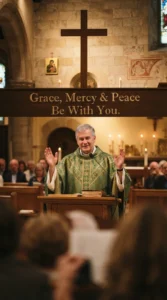
In Christian liturgy, this blessing — often simply called “the Benediction” — has been used to conclude services since the earliest centuries of the Church.
At Mass (Roman Catholic)
In the Roman Catholic Mass, the Priestly Blessing forms part of the Concluding Rite. After Communion and the Prayer after Communion, the priest greets the people, and then, if a simple blessing is used, he extends his hands toward the congregation and says the words.
The connection between this blessing and the end of worship is ancient. In the Book of Sirach (Ecclesiasticus 50:20-21), Simon the High Priest completes the altar rites, then “came down and lifted up his hands over the whole congregation of the sons of Israel, to pronounce the blessing of the Lord with his lips.” The pattern — sacrifice, then blessing — was established in Temple worship and carried into the Christian Eucharist.
In Church of England Services
The Church of England’s Common Worship includes the blessing at the end of the service. When a priest is present, the priest pronounces the blessing. When a lay person leads, a different form is used — a prayer asking for blessing rather than a declaration of it.
The 1662 Book of Common Prayer uses the blessing in the Order for the Visitation of the Sick and in other contexts, with the familiar “thee/thou” language.
Can a Lay Person Say This Blessing?
In formal liturgy, the distinction is clear: the ordained minister pronounces the blessing; a lay leader prays it in petitionary form.
Outside formal worship, the answer is simpler. There is no prohibition on using the words of Numbers 6 as a prayer. Parents bless their children with this text. Families say it at the dinner table. Individuals pray it over a new home, a new year, or a difficult season. The words are Scripture, and Scripture belongs to the whole people of God.
The key distinction is between liturgical context — where ordination matters — and personal or family prayer, where the words are freely available to every believer.
What Does the Priestly Blessing Mean, Line by Line?

Each line of the blessing follows the same structure: an invocation of God’s attention, followed by the gift that attention brings.
“The Lord Bless You and Keep You”
The Hebrew verb for “bless” is barak (ברך). It is related to the word berek, meaning “knee.” The image is of God bending down to attend to the one being blessed — drawing close, giving full attention.
“Keep you” translates shamar (שׁמר). This verb means to guard, to hedge about, to protect with active vigilance. It is not passive safekeeping. It is the watchfulness of a shepherd who stays awake while the flock sleeps. The same verb appears in Psalm 121:4: “He who keeps Israel will neither slumber nor sleep.”
Together, the line asks for God’s close, protective attention.
“The Lord Make His Face Shine Upon You and Be Gracious to You”
“Make his face shine” translates the Hebrew or panim — to light up, to beam. The image is not of a distant monarch granting a favour. It is the face of a parent lighting up at the sight of a child. It is intimacy, delight, recognition.
“Be gracious to you” uses chanan (חנן), a verb that means to show unearned favour, to bend toward the lowly. It is related to chen, meaning grace or charm — the quality of being freely loved without having earned it.
Together, the line asks for God to look at us with delight and extend kindness we have no claim on.
“The Lord Lift Up His Countenance Upon You and Give You Peace”
“Lift up his countenance” is nasa panim in Hebrew — to raise the face toward someone. Its opposite is to hide the face, which in the Psalms signals judgement, distance, or abandonment. Psalm 30:7 captures this: “You hid your face; I was dismayed.” To have God lift up his face is to have his full, undivided attention. It means he is not turned away. He is looking at you.
“Give you peace” uses shalom (שׁלום). Shalom means peace, but it means more than the absence of conflict. It comes from a root that means wholeness, completeness, wellbeing. The related word shalem means “whole” or “complete.” Shelem means a peace offering. Shalom is not just quiet — it is everything being as it should be.
Together, the line asks for God to turn fully toward us and restore us to wholeness.
Why Are There Three Lines?
Jewish tradition offers several interpretations of the threefold structure. One connects the three lines to the three Patriarchs: Abraham, Isaac, and Jacob. Another links them to three attributes of God: Mercy, Courage, and Glory.
Christian readers have long seen in the three lines a foreshadowing of the Trinity: the Father who blesses and keeps, the Son whose face shines with grace, and the Spirit who brings peace and wholeness. This reading is not in the original text of Numbers — it is a theological interpretation that developed as Christians reread the Hebrew Scriptures in light of the New Testament. It gives the blessing an additional layer of meaning for Trinitarian worship.
The triple repetition of the Divine Name — YHWH spoken three times in three verses — is unique in the Torah. It makes this blessing one of the most theologically concentrated passages in Scripture.
Related guide: blessings quotes.
The Priestly Blessing in Hebrew: Text, Transliteration, and Pronunciation

The original Hebrew of the Priestly Blessing is the form in which it has been spoken for three millennia. Below is the text line by line, with Hebrew script, transliteration, and English side by side.
Ready-to-print blessing cards
Print blessings from “The Priestly Blessing in Hebrew: Text, Transliteration, and P…”
Shareable printable cards that match the messages in this section.

| Hebrew | Transliteration | English |
| יְבָרֶכְךָ יְהוָה וְיִשְׁמְרֶךָ | Yevarekhekha Adonai veyishmerekha | The Lord bless you and keep you |
| יָאֵר יְהוָה פָּנָיו אֵלֶיךָ וִיחֻנֶּךָּ | Ya’er Adonai panav elekha vichuneka | The Lord make his face shine upon you and be gracious to you |
| יִשָּׂא יְהוָה פָּנָיו אֵלֶיךָ וְיָשֵׂם לְךָ שָׁלוֹם | Yisa Adonai panav elekha veyasem lekha shalom | The Lord lift up his countenance upon you and give you peace |
You will notice the transliteration uses “Adonai” rather than attempting to pronounce the four letters YHWH (יהוה). This follows the Jewish reading tradition. The Divine Name, the Tetragrammaton, is not pronounced aloud in Jewish worship. When the text is read, “Adonai” (the Lord) is spoken in its place. The Catholic Church similarly asks that the Divine Name not be pronounced in liturgical settings.
How to Pronounce the Priestly Blessing in Hebrew
For those learning to say the blessing in Hebrew, precise pronunciation matters. Below is an IPA (International Phonetic Alphabet) transcription alongside the transliteration.
| Transliteration | IPA (Modern Israeli Hebrew) |
| Yevarekhekha Adonai veyishmerekha | jəvaʁɛxɛˈxa ʔaðoˈnaj vəjiʃmɛˈʁɛxa |
| Ya’er Adonai panav elekha vichuneka | jaʔɛʁ ʔaðoˈnaj paˈnav ʔɛˈlɛxa viħuˈnɛka |
| Yisa Adonai panav elekha veyasem lekha shalom | jiˈsa ʔaðoˈnaj paˈnav ʔɛˈlɛxa vəjaˈsem lɛˈxa ʃaˈlom |
Listen to the Blessing
Hearing the blessing chanted is the best way to internalise its rhythm and pronunciation. A high-quality recording of the Birkat Kohanim, chanted in the traditional synagogue melody,Listening to the chant reveals what the written text cannot fully capture: the slowing of the final word of each line, the melodic rise on “Adonai,” and the way the three lines build toward “shalom.”
Printable Priestly Blessing: Text for Service Bulletins and Wall Art
The text below is formatted for practical use. Copy and paste it into a service bulletin, an order of service, or print it as a standalone page. The biblical text is in the public domain. The NRSV translation used here requires acknowledgement where reproduced in printed materials.
The Priestly Blessing
Numbers 6:24-26 (NRSV)
The Lord bless you and keep you;
the Lord make his face shine upon you
and be gracious to you;
the Lord lift up his countenance upon you
and give you peace.
If you want prayer language next, open blessing prayers.
How Is the Priestly Blessing Different from Other Blessings?
The Priestly Blessing is often confused with other formal blessings. Here is how to tell them apart.
| Blessing | Source | Who Gives It | What It Does |
| Priestly (Aaronic) Blessing | Numbers 6:24-26 | Kohanim (in synagogues); ordained priests and bishops (in churches) | Invokes God’s protection, grace, and peace using the fixed biblical threefold formula |
| Apostolic Blessing | Church tradition (not a biblical text) | The Pope, or a bishop with papal delegation | Imparts a plenary indulgence, especially at the hour of death; uses a different formula invoking the Trinity through the intercession of saints |
| Benediction of the Blessed Sacrament | Liturgical rite | Priest or deacon | Blessing the congregation WITH the consecrated host in a monstrance; not a spoken formula but a gesture with the Eucharist |
The Apostolic Blessing and the Papal Blessing are the same thing — “papal” and “apostolic” refer to the Pope’s authority. They are not the same as the Priestly Blessing from Numbers 6. If you are looking for information about obtaining a Papal Blessing certificate or parchment, that is a separate topic. This page does not cover Papal Blessings. A separate resource on Apostolic Blessings is available — or planned.
Frequently Asked Questions About the Priestly Blessing
For more day-specific messages, read good morning blessings.
What are the words of the Aaronic Blessing?
The Aaronic Blessing, from Numbers 6:24-26, reads: “The Lord bless you and keep you; the Lord make his face shine upon you and be gracious to you; the Lord lift up his countenance upon you and give you peace.” God commanded Moses to give these words to Aaron and his sons for blessing the Israelites.
Who can say the Priestly Blessing?
In a synagogue, only Kohanim — male descendants of Aaron aged 13 or over — may perform the Birkat Kohanim, and only in the presence of a minyan. In Christian liturgy, an ordained priest or bishop pronounces the blessing. In personal or family prayer, any person may use the words.
What does “keep you” mean in the Priestly Blessing?
The Hebrew verb shamar means to guard, hedge about, and protect with active vigilance. It is the same verb used in Psalm 121:4: “He who keeps Israel will neither slumber nor sleep.” The blessing asks not for passive safety but for God’s watchful, attentive defence.
Can a lay person bless their children with the Priestly Blessing?
Yes. Jewish parents routinely bless their children with the Birkat Kohanim on Friday nights before Shabbat. Christian parents may use the words of Numbers 6 as a prayer over their children or family. In formal liturgy, a lay leader uses the petitionary form (“May the Lord bless us”), but in the home, the words are freely available.
What is the Priestly Blessing called in Hebrew?
It is called Birkat Kohanim (ברכת כהנים), meaning “the blessing of the priests.” In rabbinic literature, it is also called nesiat kapayim (“the raising of the hands”), and in Yiddish it is known as duchening, from the word dukhan meaning the platform where the Kohanim stand.
Is the Priestly Blessing the same as the Apostolic Blessing?
No. The Priestly Blessing is the biblical threefold blessing from Numbers 6, given by Kohanim or ordained priests. The Apostolic Blessing is given by the Pope or a delegated bishop and usually carries a plenary indulgence. They have different origins, different wording, and different purposes.
Ready-to-print blessing cards
Print blessings from “more printables”
Shareable printable cards that match the messages in this section.