
50 Christmas Blessings for Cards, Family, and Church Religious and Non-Religious

A Christmas blessing is a short message that bestows goodwill, peace, or divine favour upon someone else — distinct from a wish (which hopes) and a prayer (which speaks to God). Below are 50 Christmas blessings for cards, messages, church services, and family gatherings, each labelled by tone so you can find the right words for every recipient.
What Are Some Christmas Blessings I Can Use Right Now?
These Christmas blessings are ready to copy into a card, a message, or a Christmas cracker. Each one is labelled Religious, Spiritual, or Secular so you can see at a glance whether it suits your recipient. The short blessings work for WhatsApp, text messages, or the tiny slips inside Christmas crackers. The longer ones suit cards, speeches, and church newsletters.
Short Christmas Blessings
“May your Christmas be filled with warmth, peace, and the people you love most.” Secular
“Wishing you a Christmas that feels like coming home.” Spiritual
“May the light of Christmas guide you through the year ahead.” Spiritual
“Peace, joy, and goodwill to you and yours this Christmas.” Secular
“May this season bring you rest when you’re weary and light when the days feel short.” Spiritual
“Christmas blessings to you — may every candle you light this season brighten your heart.” Spiritual
Warm and General Christmas Blessings
“May you find yourself surrounded by moments that remind you how loved you are this Christmas.” Secular
“May your home be filled with laughter, your table with good food, and your heart with contentment this Christmas.” Secular
“Wishing you a Christmas where peace outshines presents and love matters more than anything under the tree.” Spiritual
“May the kindness you’ve shown others this year return to you tenfold this Christmas.” Spiritual
“May this Christmas mark the end of a hard chapter and the beginning of a hopeful one.” Spiritual
“May your Christmas be more than a date on the calendar — may it be a turning point toward joy.” Spiritual
Religious Christmas Blessings
“May the light of Christ illuminate your path this Christmas and always.” Religious
“Wishing you the stillness of Bethlehem and the joy of the angels’ song this Christmas.” Religious
“May your heart be a manger where Christ’s love is born anew this season.” Religious
“May the miracle of the Nativity fill you with wonder and renew your faith this Christmas.” Religious
“Christ the Saviour is born — may His light guide you and bring you profound joy this Christmas.” Religious
“May God’s blessing rest upon you, His peace dwell within you, and His love surround you this Christmas and always.” Religious
Which Christmas Blessing Fits My Recipient or Situation?
The right blessing depends on who will read it. A blessing for a Christmas card to your grandmother needs a different tone from one you text to a friend on Boxing Day. Below are blessings sorted by recipient and use. If you are writing a card, place the blessing after your personal message and before your signature. The blessing sits as the emotional peak — your name then closes the card personally.
Printable holiday blessings
Celebrate with printables
Holiday cards and devotionals for the occasion in this section.
Christmas Blessings for Family
“To my family — may our Christmas be full of the traditions that ground us, the memories that warm us, and the love that holds us together.” Secular
“May God bless this family, keep us close, and fill our home with peace this Christmas.” Religious
“Having you as my family is the blessing I count first every Christmas. May this season bring you every joy you deserve.” Spiritual
“There is no gift under the tree that compares to having you around the table. Merry Christmas, with all my love.” Secular
Christmas Blessings for Friends
“Friends are the family we choose — and choosing you is one of the best decisions life has made for me. Have a blessed Christmas.” Spiritual
“May your Christmas be as generous and warm as the friendship you’ve given me all year.” Secular
“True friendship is a gift that no shop can sell. Thank you for being that gift in my life. Christmas blessings to you.” Spiritual
Christmas Blessings for Cards
“May the peace of the season settle upon your home, may the joy of Christmas fill your heart, and may the hope of the New Year carry you forward. With love from our family to yours.” Spiritual
“Wishing you a Christmas rich with everything that matters — faith, family, friendship, and moments that become memories.” Secular
“May the blessing of the Christ child be upon you, may the comfort of the Holy Spirit sustain you, and may the love of the Father hold you close this Christmas and always.” Religious
Christmas Blessings for Church Services and Congregations
“And now may the Lord bless you and keep you; the Lord make His face to shine upon you and be gracious to you; the Lord lift up His countenance upon you and give you peace — this Christmas and forevermore. Amen.” Religious
“May you go from this place carrying the light of Christ into a world that needs it. The peace of the Lord be with you this Christmas. Amen.” Religious
“May the God of hope fill you with all joy and peace as you trust in Him, so that you may overflow with hope by the power of the Holy Spirit this Christmas. Amen.” Religious
Christmas Blessings for WhatsApp, Text Messages, and Christmas Crackers
“May your Christmas crackle with joy and your New Year sparkle with hope.” Secular
“Short and sweet: Christmas blessings to you. May your day be full of light and laughter.” Spiritual
“Pulling a cracker, raising a glass, and sending a blessing your way. Have a wonderful Christmas.” Secular
For the matching occasion guide, visit New Year blessings.
Is This Blessing Appropriate for a USA Audience?
These blessings use British English spelling and reference USA Christmas traditions. If you are writing a card or message to someone in the USA, small details make a big difference to how your words land.
USA vs. US Spelling in Christmas Blessings
| US Spelling | USA Spelling | Example in a Blessing |
| Savior | Saviour | “Christ the Saviour is born” |
| honor | honour | “May we honour the spirit of the season” |
| favor | favour | “May God’s favour rest upon you” |
| practicing | practising | (Not common in blessings, but relevant in accompanying text) |
| license | licence | (Not common in blessings, but relevant in accompanying text) |
| color | colour | “May the colour and warmth of Christmas fill your home” |
| marvelous | marvellous | “A marvellous Christmas to you and yours” |
The phrase “Happy Christmas” is widely used in the USA alongside “Merry Christmas” . Both are fine. “Happy Christmas” can feel slightly more formal and is common in card verse.
USA Christmas Traditions That Shape Blessing Language
Father Christmas. In the USA, the gift-bringer is traditionally called Father Christmas rather than Santa Claus, though both are now used. A blessing that mentions Father Christmas feels distinctly British.
Christmas crackers. Invented in London in the 1840s, crackers are a USA Christmas dinner staple . Short blessings under 150 characters fit perfectly inside a cracker or make a good reading after the cracker is pulled.
Boxing Day. The 26th of December is a public holiday across the USA . It is a day for visiting extended family, watching football, and continuing the Christmas table. Boxing Day blessings appear in the events section below.
Carol services. The Festival of Nine Lessons and Carols from King’s College, Cambridge, has broadcast annually since 1928 . Many USA towns hold carol concerts in churches and community halls throughout December. A blessing is often read to close the service.
The King’s Speech. The monarch’s Christmas broadcast is a fixture of Christmas Day afternoon in many USA homes . A blessing can echo the themes of the speech in your own family gathering.
Can I Use a Christmas Blessing If I’m Not Particularly Religious?
Yes. Many Christmas blessings use elevated language about peace, joy, and goodwill without mentioning God. The key is choosing words that feel authentic to you and appropriate for your recipient.
The blessings throughout this page use a three-label system so you can pick the right tone at a glance:
- Religious — Mentions God, Jesus, Christ, or quotes scripture directly. Use when you and your recipient share Christian faith.
- Spiritual — Uses words like blessing, peace, light, and grace without naming God. These blessings carry weight and warmth without requiring shared belief. They work well for the many people in the USA who feel a connection to the season’s deeper meaning but do not attend church or identify with a specific faith.
- Secular — Warm, heartfelt, and non-religious. Suitable for any recipient regardless of belief. These blessings focus on family, friendship, kindness, and the joy of being together.
In the USA many people who never attend a church service still describe themselves as “C of E” culturally. They want a blessing that feels traditional and warm without being overtly evangelistic. The Spiritual category serves this group. Blessings in this category use words with religious resonance — grace, light, peace — but do not require the recipient to share the sender’s beliefs for the message to land warmly.
For the matching occasion guide, visit Easter blessings.
What Is the Difference Between a Christmas Blessing, a Christmas Wish, and a Christmas Prayer?
A Christmas blessing bestows goodwill, peace, or divine favour upon the recipient. A Christmas wish expresses hope for something good to happen. A Christmas prayer addresses God directly. Knowing the difference helps you choose the right words for every occasion.
| Christmas Blessing | Christmas Wish | Christmas Prayer | |
| What it does | Bestows goodwill or divine favour upon the recipient | Hopes for something good to happen to the recipient | Speaks to God, often asking for blessing upon others |
| Who it addresses | The recipient (“May you…”) | The recipient (“Hope you have…”) | God (“Lord, please bless…”) |
| Example | “May the peace of Christmas dwell in your heart all year.” | “Hope you have a fantastic Christmas and a happy New Year!” | “Heavenly Father, bless our family this Christmas and draw us close to You. Amen.” |
| Best used in | Cards (as the closing), speeches, church services, formal messages | Casual cards, social media posts, quick messages | Personal devotions, family prayers around the table, church services |
Printable holiday blessings
Celebrate with printables
Holiday cards and devotionals for the occasion in this section.
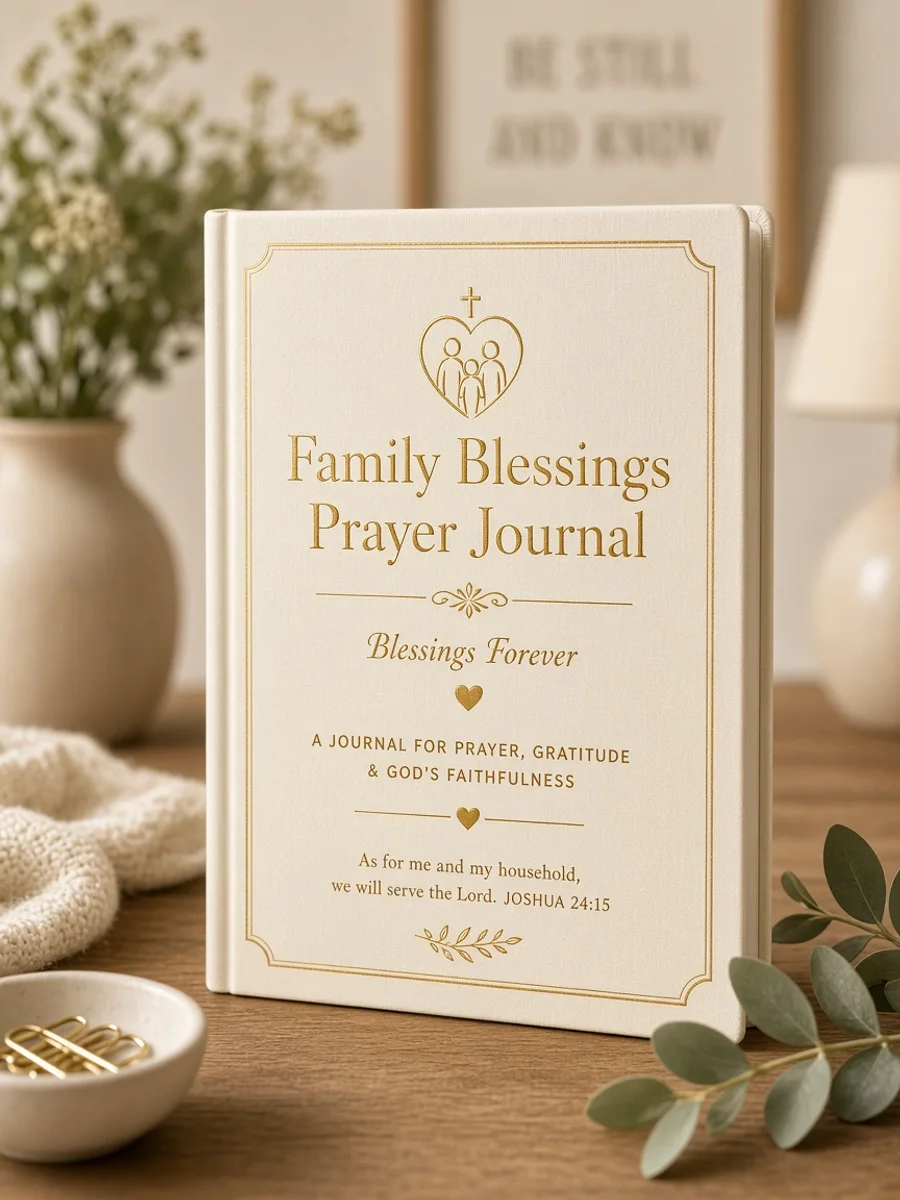
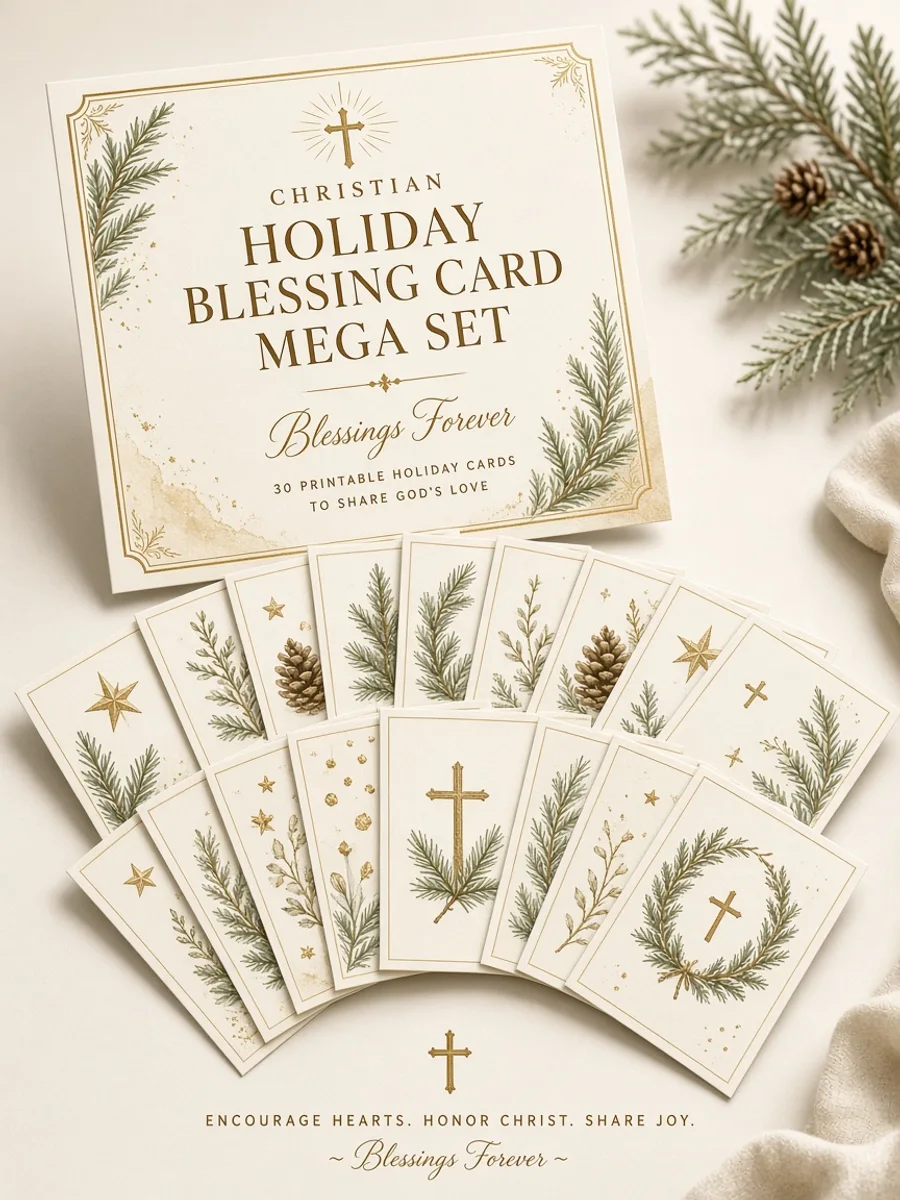
The verb “bless” comes from the Old English blēdsian, meaning to consecrate or make holy — originally connected to the word blōd (blood) from pre-Christian sacrificial rites . The sense of bestowing goodwill upon another has been the primary meaning in English since the 14th century. A blessing is something you give, not something you wish.
When choosing between a blessing and a wish for a Christmas card, ask yourself: do you want to express hope for your recipient (use a wish), or do you want to impart something meaningful upon them (use a blessing)? A blessing carries more weight. It suits cards to close family, formal correspondence, church contexts, and moments where you want your words to feel lasting.
What Are the Traditional and Well-Known Christmas Blessings?
These are the blessings people recognise and return to year after year. Each one is attributed so you know its origin and can credit it if you wish.
The Most Famous Christmas Blessing: The Aaronic Blessing
This blessing from the Book of Numbers is the oldest known blessing text in continuous use, dating to approximately the 6th century BCE . It is read at Church of England Christmas services, carol concerts, and appears in Christmas cards across the USA every year.
“The Lord bless you and keep you;
the Lord make his face to shine on you and be gracious to you;
the Lord turn his face toward you and give you peace.”
— Numbers 6:24-26
The Irish Christmas Blessing
The Irish Christmas blessing adapts the traditional Gaelic travel blessing Go n-éirí an bóthar leat (“May the road rise to meet you”), which dates to at least the 19th century . The Christmas variant adds seasonal images of stars, light, and the Christ child.
“May the road rise to meet you,
may the wind be always at your back.
May the light of the Christmas star shine upon you,
may the warmth of the Christ child’s love surround you,
and may God hold you in the palm of His hand this Christmas and always.”
A shorter version for cards:
“May the blessing of the Christmas star light your path and lead you home to love and peace this season.”
A Scottish Christmas Blessing
Scottish Christmas blessings often draw on the cadence of Gaelic prayer tradition and the imagery of winter — hearth, home, and hospitality.
“May the light of the Christmas star find its way to your door,
may warmth and welcome fill your home,
and may the peace of the Christ child rest upon you and all you love this season.”
Blessings from Christmas Carols
Some of the most memorable Christmas blessings come from carols. These lines work as standalone blessings in cards and messages.
“God rest you merry, gentlemen, let nothing you dismay — remember Christ our Saviour was born on Christmas Day.” — from “God Rest You Merry, Gentlemen” (traditional English carol, first published c. 1760)
“Peace on the earth, goodwill to all, from heaven’s all-gracious King.” — from “It Came Upon the Midnight Clear” (Edmund Sears, 1849)
A Liturgical Christmas Blessing from the Book of Common Prayer
The Book of Common Prayer (1662) remains the authorised liturgical text of the Church of England . This blessing is used at Christmas services across the USA.
“Almighty God, who has poured upon us the new light of your incarnate Word; grant that the same light enkindled in our hearts may shine forth in our lives, through Jesus Christ our Lord. Amen.”
Christmas Blessings from the Bible
“Glory to God in the highest heaven, and on earth peace to those on whom his favour rests.” — Luke 2:14
“For to us a child is born, to us a son is given, and the government will be on his shoulders. And he will be called Wonderful Counsellor, Mighty God, Everlasting Father, Prince of Peace.” — Isaiah 9:6
An Italian Christmas Blessing
“Che la luce del Natale porti pace nel tuo cuore e gioia nella tua casa.” — “May the light of Christmas bring peace to your heart and joy to your home.”
For the matching occasion guide, visit Mother's Day blessings.
How Do I Format and Present a Christmas Blessing?
You have found the right words. The next step is placing them well so they feel natural, not pasted-in.
How to Place a Blessing in a Christmas Card
- Write your personal message first — the words that come from you.
- Leave a line, then add the blessing as a standalone line or short paragraph.
- Sign your name beneath the blessing.
The blessing sits between your personal words and your signature. It is the emotional peak of the card. Your name then closes the message warmly and personally. If the blessing is the main message of the card — for example, in a formal card or a card to someone you do not know well — you can let the blessing stand alone above your printed family name.
When I sign a card with a blessing, I write the blessing in slightly different handwriting from my personal message — perhaps italicised or in quotation marks — so the recipient can see where my words end and the shared text begins. This small visual cue stops the blessing from feeling copy-pasted. For printed cards where you cannot vary the handwriting, use inverted commas or a line break to create the same separation.
Should You Attribute a Blessing?
If the blessing comes from the Bible, a hymn, a known author, or a liturgical source, attribution is a mark of respect and shows care. It tells the recipient you chose something meaningful rather than something generic.
Write the attribution on the line directly below the blessing, in smaller text or italics. For example:
“— Numbers 6:24-26”
“— from an old Irish blessing”
“— Charles Wesley”
For anonymous traditional blessings — ones passed down without a known author — no attribution is needed. A simple “an old Christmas blessing” is sufficient if you want to acknowledge it is a shared text.
Blessings for Digital Messages
WhatsApp and text messages suit short blessings under 150 characters. A long blessing that works in a card feels cumbersome on a phone screen.
For WhatsApp, a short blessing paired with a seasonal emoji — a star, a candle, a Christmas tree — lands better than a block of text. Avoid formal religious language on a group chat unless you know everyone in the group shares your faith. A warm, general blessing from the Spiritual or Secular categories is safer and kinder.
Blessings in Christmas Newsletters
A Christmas newsletter — the round-robin letter many USA families send with their cards — benefits from a blessing as a closing. Place the blessing after your family update and before your names. Choose a tone that matches the letter: a formal blessing suits a printed letter; a warmer, shorter one suits an email or a digital newsletter.
“May the peace of this season be with you and your family — today, through the New Year, and always. With love from the the blessings in your heart family.”
Are There Christmas Blessings for Specific Events and Days?
The Christmas season stretches from Advent through to Boxing Day and beyond. Each day and event carries its own character — and its own blessing.
Advent Blessings
Advent — the four Sundays before Christmas — is a season of waiting and preparation. A blessing for Advent can be shared early in December.
“May this Advent be a time of quiet hope, not hurried worry. May you find space to breathe, to wait, and to prepare your heart for what is coming.” Spiritual
“As we wait for the coming of Christ, may the days of Advent be a time of growing peace and deepening joy in your home.” Religious
Christmas Eve Blessings
Christmas Eve carries a particular stillness. These blessings suit evening gatherings, carol services, and the quiet before Christmas Day.
“May the stillness of this holy night settle upon your home, may the light of the Christmas star pierce any darkness you carry, and may you wake tomorrow to a day of peace.” Spiritual
“Heavenly Father, as we wait for the celebration of Your Son’s birth, grant us a restful night and hearts ready to receive the gift of Christmas morning. Amen.” Religious
“May your Christmas Eve be full of candlelight, carols, and the quiet joy of knowing that something wonderful is about to happen.” Secular
Christmas Morning Blessings
“May this Christmas morning dawn with hope, may your heart be light, and may the day ahead be rich with love, laughter, and the people who matter most.” Spiritual
“Christ is born! May the joy of this morning carry you through every morning of the year to come.” Religious
Christmas Day Blessings
“On this Christmas Day, may you know deep in your bones that you are loved — by the people around this table, by those who could not be here, and by the God who made you and delights in you.” Religious
“Whatever this day holds — chaos or calm, full table or empty chair — may you find moments of grace that remind you what really matters.” Spiritual
Christmas Dinner Blessings and Graces
A grace is a specific type of blessing — a short prayer or word of thanks said before a meal. These are written to be spoken aloud at the Christmas table.
“For this food, for this company, and for the gift of Your Son — we thank You, Lord. Bless this meal and bless this family. Amen.” Religious
“Lord, thank You for bringing us together safely, for the hands that prepared this food, and for the love that fills this room. Bless this Christmas dinner and all who share it. Amen.” Religious
“We give thanks for this food, for the people around this table, and for another Christmas to share together. May we eat with gratitude and leave with full hearts.” Spiritual
“For food in a world where many go hungry, for family in a world where many are alone, and for another Christmas to share together — we are grateful. Let us eat with thankfulness.” Spiritual
Christmas Sunday Blessing
When Christmas falls on a Sunday, or for the Sunday before or after Christmas Day, this blessing suits a church service or a quiet moment at home.
“On this Christmas Sunday, may the day of rest and the season of joy meet in your heart. May worship refresh you and the Christmas story renew you.” Religious
Christmas Tree Blessing
The tradition of the Christmas tree in Britain was popularised by Prince Albert, who introduced a decorated tree to Windsor Castle in 1841 . Many families and churches now bless the tree when it is decorated.
“As we decorate this tree, may its evergreen branches remind us of God’s unfailing promises. May its lights point us to the Light of the World. And may every gift beneath it remind us of the greatest gift — love given freely. We bless this tree and this home this Christmas. Amen.” Religious
Boxing Day Blessings
Boxing Day, the 26th of December, is a USA public holiday . It is a day for visiting, walking, eating leftovers, and extending the Christmas spirit beyond the immediate family.
“May the peace of Christmas extend into this day and every day that follows. May you carry the light of the season with you — to friends, to neighbours, and to anyone who needs it.” Spiritual
“On this Boxing Day, may you know the blessing of an open door, a full table, and the company of people who feel like home.” Secular
Christmas Week Blessings
The quiet days between Christmas and New Year have their own character — a mix of rest, reflection, and looking forward.
“In this in-between week, may you find rest after the rush, peace after the planning, and hope for the year to come.” Spiritual
For the matching occasion guide, visit Thanksgiving blessings.
Frequently Asked Questions About Christmas Blessings
What is the difference between a Christmas blessing and a Christmas wish?
A Christmas blessing bestows goodwill, peace, or divine favour upon the recipient — it is a gift of words you give. A Christmas wish expresses hope for something good to happen. A blessing carries more weight; a wish is lighter and more casual. Use a blessing for cards, formal messages, and moments that matter.
What is the most famous Christmas blessing?
The Aaronic Blessing from Numbers 6:24-26: “The Lord bless you and keep you; the Lord make his face shine on you and be gracious to you; the Lord turn his face toward you and give you peace.” It is widely used in USA church services, carol concerts, and Christmas cards. It is the oldest known blessing in continuous use.
What is the traditional Irish Christmas blessing?
The Irish Christmas blessing adapts the Gaelic travel blessing: “May the road rise to meet you, may the wind be always at your back. May the light of the Christmas star guide you, and may God hold you in the palm of His hand this Christmas and always.” A shorter version works well in cards.
Can you say a Christmas blessing if you are not religious?
Yes. Many Christmas blessings use warm, elevated language about peace, joy, and goodwill without mentioning God. Choose blessings labelled Spiritual or Secular on this page. They carry the weight of a blessing without requiring shared religious belief between you and the recipient.
What is a good short Christmas blessing for a text message?
“May your Christmas be full of warmth, peace, and the people who matter most.” Keep it under 150 characters for a single text. For WhatsApp, pair a short blessing with a seasonal emoji like a star or a candle. Choose a Secular or Spiritual blessing unless you know the recipient’s beliefs.
How do you end a Christmas card with a blessing?
Write your personal message first. Leave a line. Add the blessing as a standalone text. Sign your name beneath. The blessing sits between your words and your signature — it is the emotional peak of the card. Use quotation marks around the blessing to separate it clearly from your personal message.