
Irish Blessings: Full Text, Origins & Occasion Guide
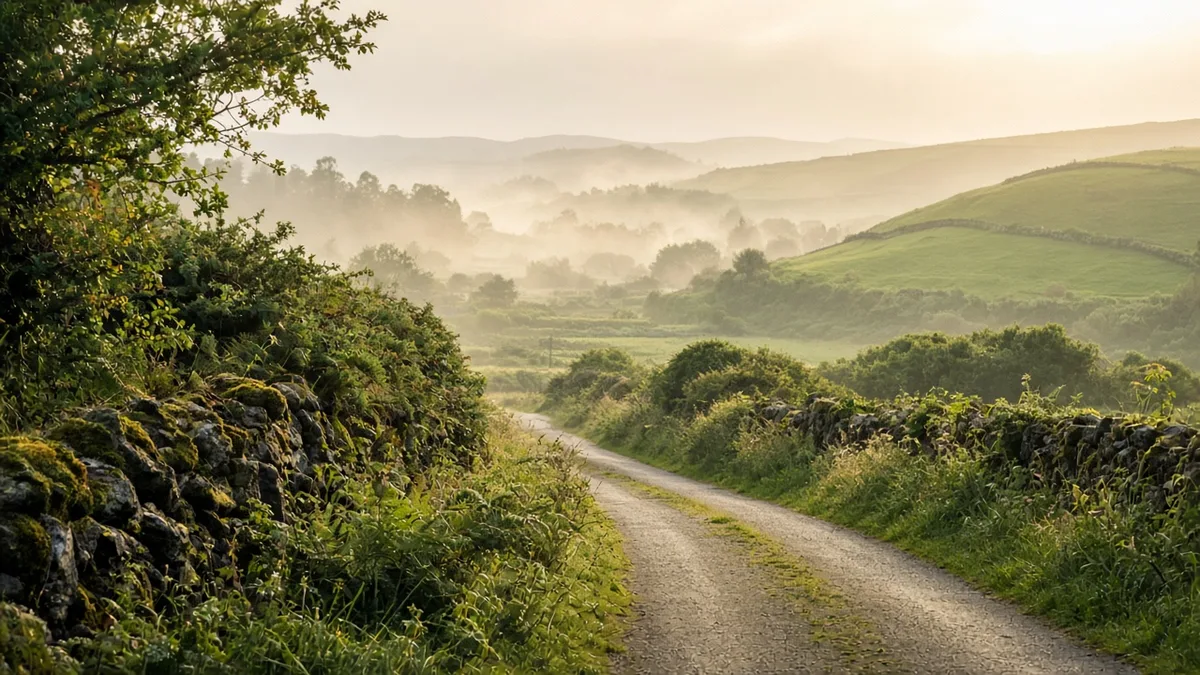
Irish blessings are short, poetic expressions of goodwill, protection, or hope — spoken at weddings, funerals, departures, and gatherings across Ireland and its diaspora for centuries. The most widely known is “May the road rise to meet you,” a traditional Gaelic blessing translated from the Irish “Go n-éirí an bóthar leat.” Below you will find 45 Irish and Celtic blessings, organised by occasion, with their origins, meanings, and pronunciation guidance where the original Irish is known.
What Are the Most Famous Irish Blessings?
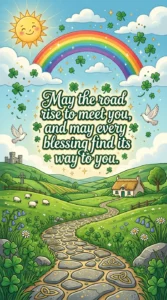
“May the road rise to meet you” is the most widely recognised Irish blessing. The full text reads: “May the road rise to meet you. May the wind be always at your back. May the sun shine warm upon your face, the rains fall soft upon your fields, and, until we meet again, may God hold you in the palm of His hand.” It was originally written in Irish as “Go n-éirí an bóthar leat” and is used at weddings, funerals, and farewells.
These are the blessings most people search for — the ones that appear in wedding speeches, on greeting cards, engraved on gifts, and read aloud at funerals. Each is presented in full with its line count, approximate reading time, and a note on where it fits best.
May the Road Rise to Meet You
May the road rise to meet you.
May the wind be always at your back.
May the sun shine warm upon your face,
the rains fall soft upon your fields,
and, until we meet again,
may God hold you in the palm of His hand.
Lines: 6
Reading time: ~22 seconds at normal speaking pace
Best for: Weddings, funerals, farewells, travel send-offs
Tone: Warm, solemn, universal
Origin: Traditional Gaelic blessing. The Irish original is “Go n-éirí an bóthar leat” — literally “May the road succeed with you.
Variants: Some versions use “hollow of His hand” instead of “palm of His hand.” Some add “rise up” instead of “rise.” The version above is the most common English wording used in the UK and Ireland today.
May Your Troubles Be Less
May your troubles be less
and your blessings be more,
and nothing but happiness
come through your door.
Lines: 4
Reading time: ~10 seconds
Best for: Housewarmings, general well-wishing, greeting cards
Tone: Light, warm, everyday
Origin: Likely a modern Irish-American composition from the mid-20th century.
May Love and Laughter Light Your Days
May love and laughter light your days
and warm your heart and home.
May good and faithful friends be yours,
wherever you may roam.
May peace and plenty bless your world
with joy that long endures.
May all life’s passing seasons
bring the best to you and yours.
Lines: 8
Reading time: ~25 seconds
Best for: Weddings, anniversaries, all-occasion toasts
Tone: Warm, celebratory, universal
Origin: Modern Irish-style composition, 20th century. No single attributed author.
May You Always Have Walls for the Winds
May you always have walls for the winds,
a roof for the rain, tea beside the fire,
laughter to cheer you, those you love near you,
and all your heart might desire.
Lines: 5
Reading time: ~15 seconds
Best for: Housewarmings, new home blessings, hospitality-themed toasts
Tone: Warm, domestic, comforting
Origin: Traditional, with variants appearing in Irish and Scottish collections. The imagery — walls, roof, fire, tea — draws directly from rural Irish domestic life.
May Those Who Love Us
May those who love us, love us.
And those who don’t love us,
may God turn their hearts.
And if He doesn’t turn their hearts,
may He turn their ankles,
so we’ll know them by their limping.
Lines: 6
Reading time: ~15 seconds
Best for: Humorous toasts, informal gatherings, St. Patrick’s Day
Tone: Witty, mischievous
Origin: Likely a modern humorous composition, 20th century. No documented pre-20th-century source.
May the Blessing of Light Be on You
May the blessing of light be on you —
light without and light within.
May the blessed sunlight shine on you
like a great peat fire,
so that stranger and friend may come
and warm himself at it.
And may light shine out of the two eyes of you,
like a candle set in the window of a house,
bidding the wanderer come in out of the storm.
Lines: 10 (extract — the full version continues with rain and earth blessings)
Reading time: ~30 seconds for this extract
Best for: Home blessings, hospitality contexts, reflective moments
Tone: Lyrical, contemplative, richly imagistic
Origin: Scottish blessing, frequently included in Celtic blessing collections. The full version appears in multiple 20th-century devotional compilations.
May There Always Be Work for Your Hands to Do
May there always be work for your hands to do.
May your purse always hold a coin or two.
May the sun always shine upon your window pane.
May a rainbow be certain to follow each rain.
May the hand of a friend always be near to you,
and may God fill your heart with gladness to cheer you.
Lines: 6
Reading time: ~20 seconds
Best for: Retirement, new job, general well-wishing
Tone: Warm, practical, uplifting
Origin: Traditional, widely circulated. Sometimes labelled a “traditional Celtic blessing.”
Which Irish Blessing Is Right for My Occasion?
Each occasion calls for a different tone. A wedding blessing leans warm and hopeful. A funeral blessing needs weight and gentleness. A housewarming blessing works best when it feels like an embrace.
Below, blessings are organised by occasion. Each section includes the full text, a “best for” recommendation, and a delivery note — who typically speaks it, when, and how long it takes.
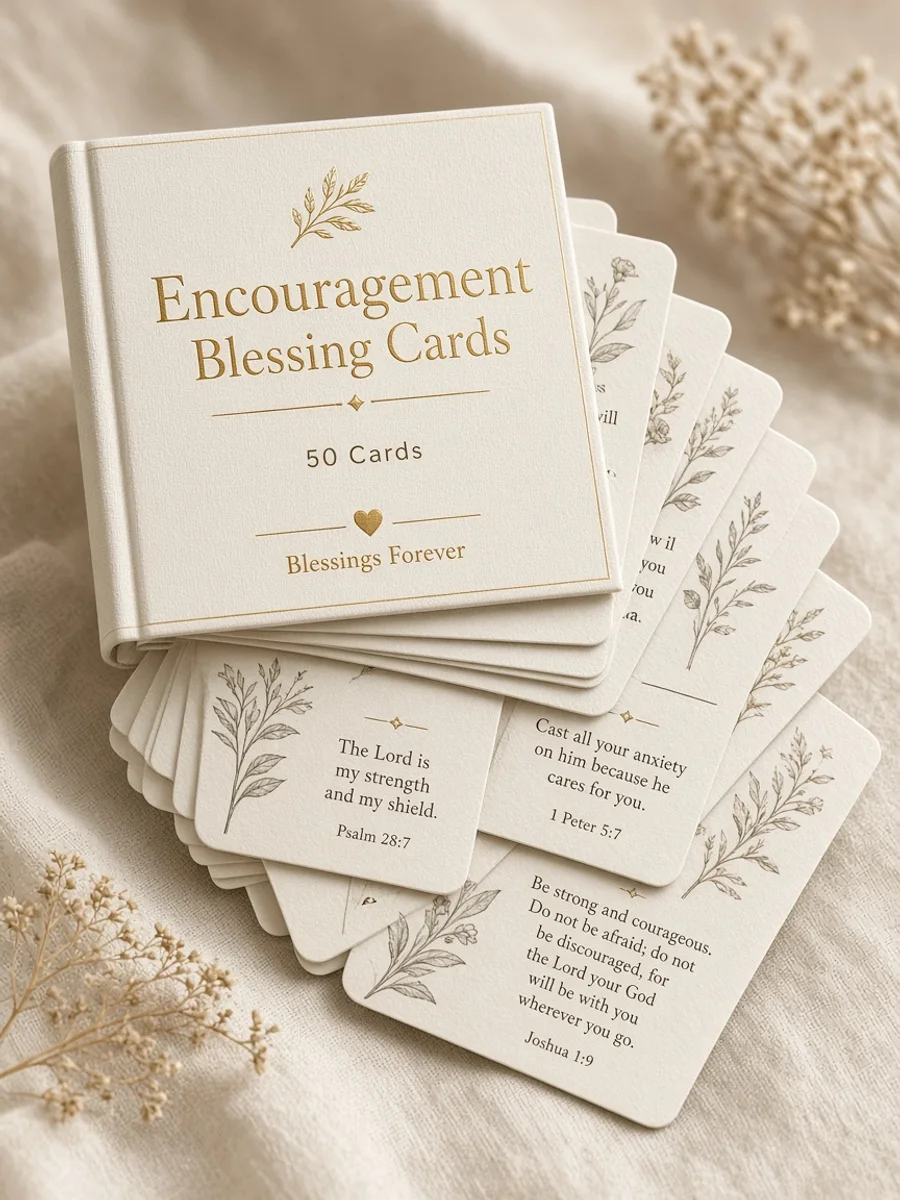
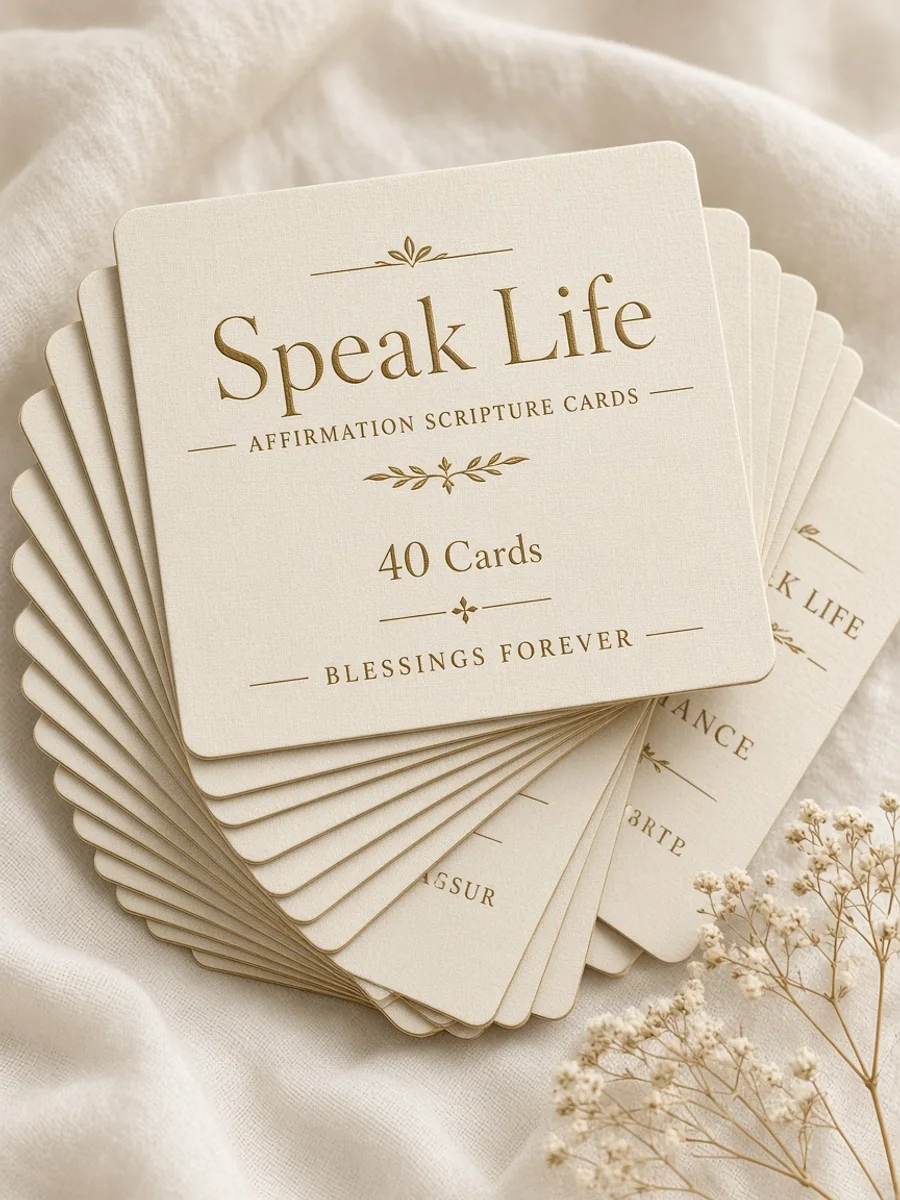
Ready-to-print blessing cards
Print blessings from “Which Irish Blessing Is Right for My Occasion?”
Shareable printable cards that match the messages in this section.
Wedding Blessings
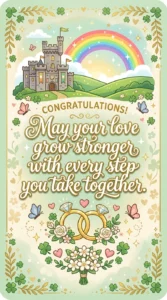
Irish wedding blessings are the most-requested category. They appear as readings during the ceremony, as the closing words of a father-of-the-bride speech, or printed on the wedding stationery.
Wedding Blessing: A Shared Journey
May the road you travel together
be filled with kindness and light.
May every step bring you closer
to the home you build in each other.
Lines: 4
Reading time: ~12 seconds
Best for: A short reading during the ceremony, or printed on the order of service
Wedding Blessing: Love and Companionship
May your love be modern enough
to survive the times
and old-fashioned enough
to last forever.
Lines: 4
Reading time: ~10 seconds
Best for: A modern-leaning wedding. Works well read by a friend rather than a parent.
Wedding Blessing: From This Day Forward
May God be with you and bless you.
May you see your children’s children.
May you be poor in misfortune, rich in blessings.
May you know nothing but happiness
from this day forward.
Lines: 5
Reading time: ~15 seconds
Best for: A religious wedding ceremony. Often used as a closing blessing by the officiant.
Wedding Blessing: Faith and Partnership
May the blessing of light be on you —
light without and light within.
May the sunshine warm your hearts
and friendship guide your days.
Lines: 4
Reading time: ~12 seconds
Best for: A humanist or spiritual-but-not-religious ceremony
Wedding Blessing: Shared Life
May you share
the laughter of the morning
and the quiet of the evening,
the strength of partnership
and the comfort of home.
Lines: 5
Reading time: ~12 seconds
Best for: A short reading, particularly effective at a smaller wedding
Delivery note for weddings: At UK wedding ceremonies, an Irish blessing typically appears either as a reading during the service or as the closing words of the father of the bride’s speech. When delivered as a speech closer, it replaces the generic “please raise your glasses” transition. The speaker delivers the blessing, pauses, then says “Please raise your glasses to the bride and groom.” The blessing takes 10–25 seconds. At approximately 100 words per minute — standard for solemn but warm delivery — even the longest wedding blessing here runs under 30 seconds.
Funeral and Remembrance Blessings
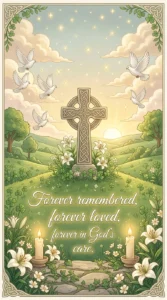
Irish funeral blessings offer comfort without demanding belief. They work in religious services, humanist ceremonies, and everything between.
Funeral Blessing: May the Road Rise
May the road rise to meet you.
May the wind be always at your back.
May the sun shine warm upon your face,
the rains fall soft upon your fields,
and, until we meet again,
may God hold you in the palm of His hand.
Lines: 6
Reading time: ~22 seconds
Best for: The closing words of a eulogy, or printed on the funeral order of service. This is the most-requested funeral blessing in the UK.
Funeral Blessing: Peace and Rest
May the gentle winds of heaven
blow softly upon this place,
whispering peace to the soul
that has gone before us.
Lines: 4
Reading time: ~12 seconds
Best for: A graveside or crematorium committal. Short enough to be memorable when emotions are high.
Funeral Blessing: Memory and Love
May the love of those who mourn you
surround your memory like a quiet light,
guiding us through the darkness of loss.
Lines: 3
Reading time: ~10 seconds
Best for: A humanist or non-religious funeral. Contains no reference to God.
Funeral Blessing: Until We Meet Again
Those we love do not go away;
they walk beside us every day —
unseen, unheard, but always near.
Lines: 3
Reading time: ~10 seconds
Best for: Printing on a memorial card or reading at an anniversary gathering
Delivery note for funerals: A funeral blessing is typically delivered by the celebrant, officiant, or a family member speaking the eulogy. It works best placed at the very end of the eulogy — after the personal memories, before the committal or closing music. Speak it slightly slower than conversational pace. A 20-second blessing delivered at funeral pace runs closer to 25 seconds. If you are a family member reading it, print it on a small card and hold it — nobody expects you to memorise words on this day.
Birthday Blessings
May you have all the happiness
and luck that life can hold,
and at the end of all your rainbows,
may you find a pot of gold.
Lines: 4
Reading time: ~10 seconds
Best for: A birthday card inscription or a short spoken toast
Birthday Blessing: Another Year
May your mornings bring joy
and your evenings bring peace.
May your troubles grow few
as your blessings increase.
Lines: 4
Reading time: ~10 seconds
Best for: A birthday toast from a friend or partner
Christmas Blessings
May the spirit of Christmas
fill your home with peace,
your heart with love,
and your life with joy.
Lines: 4
Reading time: ~10 seconds
Best for: A Christmas card or a short reading before Christmas dinner
Christmas Blessing: The Candle of Christmas
May peace and plenty be the first
to lift the latch on your door,
and may happiness be guided to your home
by the candle of Christmas.
Lines: 4
Reading time: ~12 seconds
Best for: A Christmas Eve toast or printed on a family Christmas card
Christmas Blessing: The Christmas Star
May the light of the Christmas star
shine upon your home tonight.
Lines: 2
Reading time: ~5 seconds
Best for: The shortest possible Christmas blessing — fits on a gift tag or in a text message
New Year Blessings
May the new year bring you
the courage to begin again,
the wisdom to let go,
and the grace to receive what comes.
Lines: 4
Reading time: ~10 seconds
Best for: A New Year’s Eve toast or a January 1st message
New Year Blessing: The Road Ahead
May your past be a pleasant memory,
your future filled with delight and mystery,
your now a glorious moment,
that fills your life with deep contentment.
Lines: 4
Reading time: ~12 seconds
Best for: A reflective New Year’s gathering
Travel and Farewell Blessings
Travel Blessing
May good luck be with you
wherever you go,
and your blessings outnumber
the shamrocks that grow.
Lines: 4
Reading time: ~8 seconds
Best for: A send-off at an airport, a farewell card, or a bon voyage toast
Farewell Blessing
May the road rise to meet you.
May the wind be always at your back.
May the sun shine warm upon your face,
the rains fall soft upon your fields,
and, until we meet again,
may God hold you in the palm of His hand.
Lines: 6
Reading time: ~22 seconds
Best for: A leaving party, a retirement send-off, or a friend emigrating
Short Farewell Blessing
May the hinges of our friendship never grow rusty.
Lines: 1
Reading time: ~4 seconds
Best for: A lighthearted goodbye, written in a card or spoken with a smile
New Home Blessings
Home Blessing: Too Small to Hold Your Friends
May your home always be too small
to hold all your friends.
Lines: 2
Reading time: ~5 seconds
Best for: A housewarming card or a humorous toast at a housewarming party
Home Blessing: Peace and Plenty
May peace and plenty be the first
to lift the latch on your door,
and happiness be your guest
today and evermore.
Lines: 4
Reading time: ~12 seconds
Best for: A housewarming gift tag or a spoken blessing when entering a new home for the first time
Home Blessing: Bless This House
Bless this house and those within.
Bless our giving and receiving.
Bless our words and conversation.
Bless our hands and recreation.
Bless our sowing and our growing.
Bless our coming and our going.
Bless all who enter and depart.
Bless this house, your peace impart.
Lines: 8
Reading time: ~20 seconds
Best for: A religious or spiritual house blessing, often read at a housewarming gathering. Source: © John Birch, from the Faith and Worship collection.
Friendship Blessings
Friendship Blessing
May good friends surround you,
good times uplift you,
and good fortune follow you always.
Lines: 3
Reading time: ~8 seconds
Best for: A card to a close friend, or a quick spoken toast among friends
Friendship Blessing: The Best Ships
There are good ships and there are wood ships,
the ships that sail the sea.
But the best ships are friendships,
and may they always be.
Lines: 4
Reading time: ~10 seconds
Best for: A lighthearted friendship toast, particularly at a reunion or gathering of old friends
Friendship Blessing: Returned a Hundredfold
May the friendship you give away
return to you a hundredfold.
Lines: 2
Reading time: ~5 seconds
Best for: A short message in a thank-you card to a friend
Good Luck Blessings
Good Luck Blessing: Shamrocks
May your blessings outnumber
the shamrocks that grow,
and may trouble avoid you
wherever you go.
Lines: 4
Reading time: ~8 seconds
Best for: St. Patrick’s Day, any occasion where you want to wish someone luck
Good Luck Blessing: A Friend to Ye
May luck be a friend to ye,
and be with ye in all yer days,
and may trouble be to ye
a stranger, always.
Lines: 4
Reading time: ~10 seconds
Best for: An informal toast, particularly effective in the Irish vernacular phrasing
St. Patrick’s Day Blessings
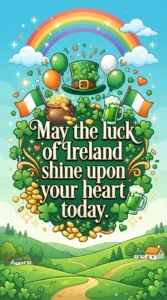
St. Patrick’s Day Blessing
May the Irish hills caress you.
May her lakes and rivers bless you.
May the luck of the Irish enfold you.
May the blessings of Saint Patrick behold you.
Lines: 4
Reading time: ~12 seconds
Best for: A St. Patrick’s Day toast, card, or social media post
St. Patrick’s Day Blessing: The Leprechauns
May the leprechauns be near you
to spread luck along your way,
and may all the Irish angels
smile upon you St. Patrick’s Day.
Lines: 4
Reading time: ~10 seconds
Best for: A lighthearted St. Patrick’s Day greeting
Baby and New Child Blessings
Baby Blessing
May you have
a world of wishes at your command,
God and His angels close to hand,
friends and family their love impart,
and Irish blessings in your heart.
Lines: 4
Reading time: ~12 seconds
Best for: A christening, naming ceremony, or new baby card
Baby Blessing: Lucky Stars
Lucky stars above you,
sunshine on your way,
many friends to love you,
joy in work and play —
laughter to outweigh each care,
in your heart a song —
and gladness waiting everywhere
all your whole life long.
Lines: 8
Reading time: ~20 seconds
Best for: A christening reading or a framed print for a nursery
Retirement Blessings
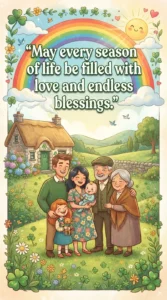
Retirement Blessing
May the road rise to meet you
in this new chapter of your life.
May the days ahead be filled
with the things you never had time for.
Lines: 4
Reading time: ~12 seconds
Best for: A retirement speech or card
Retirement Blessing: Work and Rest
May there always be work for your hands to do.
May your purse always hold a coin or two.
May the sun always shine upon your window pane.
May a rainbow be certain to follow each rain.
May the hand of a friend always be near to you,
and may God fill your heart with gladness to cheer you.
Lines: 6
Reading time: ~20 seconds
Best for: A retirement party toast — the “work for your hands” line acknowledges that retirement is not about stopping, but about choosing
Anniversary Blessings
Anniversary Blessing
May the love you share
grow deeper with each passing year,
and may the home you have built together
continue to be your shelter and your joy.
Lines: 4
Reading time: ~12 seconds
Best for: An anniversary toast from a friend or family member
Mealtime Blessings
Irish Dinner Blessing
Bless this food we are about to eat,
and bless the hands that prepared it,
and bless the company gathered here,
and may we always have enough to share.
Lines: 4
Reading time: ~10 seconds
Best for: A grace before a family meal or a dinner party with friends
Easter Blessings
May the hope of Easter
renew your spirit,
and may the promise of spring
bring light to your days.
Lines: 4
Reading time: ~10 seconds
Best for: An Easter card or a short reading at an Easter gathering
Thanksgiving and Gratitude Blessings
May the nourishment of the earth be yours,
may the clarity of light be yours,
may the fluency of the ocean be yours,
may the protection of the ancestors be yours.
Lines: 4
Reading time: ~12 seconds
Best for: A harvest celebration, Thanksgiving gathering, or any moment of collective gratitude. Source: John O’Donohue, from ‘Benedictus: A Book of Blessings.
For the matching occasion guide, visit St. Patrick's Day blessings.
How Can I Tell If an Irish Blessing Is Authentic?
Not every blessing labelled “traditional Irish” is ancient. Many popular Irish blessings fall into three categories: genuinely traditional blessings passed down through oral tradition and documented in collections like the Carmina Gadelica (1900); Christian devotional prayers adapted as blessings from the early medieval period onward; and modern Irish-style compositions from the 20th and 21st centuries, often written for weddings or St. Patrick’s Day.
The table below sets out the provenance labels used throughout this guide, so you know what you are choosing.
| Provenance | What It Means | Example |
| Traditional — oral tradition | Passed down by word of mouth across generations. First written down in the 19th or early 20th century. No single attributed author. | “May the road rise to meet you” |
| Traditional — documented source | Appears in a known, dated collection. The source is cited. | “May the blessing of light be on you” — appears in early-20th-century Scottish devotional collections |
| Modern Irish-style | A 20th or 21st-century composition written in the style of traditional Irish blessings. Often attributed to a known author or widely circulated without attribution but verifiably modern. | “May love and laughter light your days” — no pre-20th-century source |
| Source unknown | Widely circulated but without a traceable origin. Neither verifiably traditional nor provably modern. | “May your troubles be less” — likely mid-20th-century Irish-American |
We label blessings as “source unknown” where we cannot confirm origin. This is more honest than claiming false antiquity. If you are commissioning a calligrapher or printing a blessing for a formal event, verify the wording against the version in a reputable published collection — blessings mutate slightly with each retelling.
How Do You Pronounce an Irish Blessing in Gaelic?
The most famous Irish blessing was originally written in Irish (Gaeilge). If you want to speak it in its original language — at a wedding, a funeral, or a family gathering — the table below gives you the Irish text, a phonetic guide, and the literal translation.
| Irish (Gaeilge) | Phonetic Pronunciation | Literal Translation | Poetic English Version |
| Go n-éirí an bóthar leat | guh NYE-ree on BO-her lat | May the road succeed with you | May the road rise to meet you |
| Go mbeidh an ghaoth i gcónaí le do dhroim | guh meg un ghwee ih GO-nee leh duh ghrim | May the wind be always at your back | May the wind be always at your back |
| Go lonraí an ghrian go te ar d’aghaidh | guh LUN-ree un GHREE-un guh tcheh air DYE | May the sun shine warmly on your face | May the sun shine warm upon your face |
A few things to know about Irish pronunciation before you attempt this aloud:
- “gh” in Irish is a soft, voiced sound made at the back of the throat — similar to the French “r” or a very gentle gargle. In “dhroim” (back), the “dh” is similar.
- “é” is a long “ay” sound, as in “say.”
- “ó” is a long “o” sound, as in “go.”
- The stress in “Go n-éirí an bóthar leat” falls on the second syllable of “éirí” — guh NYE-ree.
Irish pronunciation varies by dialect. The phonetics above reflect the standard taught in Irish schools. If you are speaking at an event in a specific Gaeltacht (Irish-speaking region), check the local pronunciation with someone from that area. For written-only use — a printed order of service or a memorial card — the Irish text alone is sufficient and widely appreciated even by those who do not speak the language.
If you need to hear the pronunciation spoken aloud, the online dictionary Teanglann.ie and the pronunciation platform Forvo both carry recordings of native Irish speakers saying key phrases.
For the matching occasion guide, visit Mother's Day blessings.
What Do Irish Blessings Actually Mean?
Irish blessings use nature imagery — wind, sun, rain, roads, fire, stone — to express hopes about life. Some of that imagery carries Christian meaning (the wind as the Holy Spirit, the sun as God’s mercy). Some of it is simpler than that: Ireland is a windy, rainy island, and a blessing about good weather is not necessarily a theological statement.
Here, five of the most-used blessings are decoded line by line. Both the Christian interpretation and the everyday reading are given where both exist.
Ready-to-print blessing cards
Print blessings from “What Do Irish Blessings Actually Mean?”
Shareable printable cards that match the messages in this section.
“May the Road Rise to Meet You” — Line by Line
May the road rise to meet you.
The “road rising” is an Irish-language idiom. “Go n-éirí an bóthar leat” means literally “May the road succeed with you” — in other words, may your journey go smoothly, without obstacles. The image is of the road itself lifting to meet your feet, making each step easier.
May the wind be always at your back.
A wind at your back pushes you forward; a wind in your face makes progress hard. This is a practical wish from a walking culture. In Christian interpretation, the wind represents the Holy Spirit, who came as a “mighty wind” at Pentecost (Acts 2:2).
May the sun shine warm upon your face, the rains fall soft upon your fields.
Sun and rain together make things grow. A hard rain flattens crops; a soft rain nourishes them. In Christian reading, the sun represents God’s mercy — “the rising sun will come to us from heaven” (Luke 1:78) — and the rain represents God’s ongoing provision. In a literal Irish reading, this is simply a wish for decent weather, which is never guaranteed.
And until we meet again, may God hold you in the palm of His hand.
The closing image: you are held, safe, in a place of complete protection. The variant “hollow of His hand” suggests a cupped space — small, enclosed, secure. This line carries the blessing’s emotional weight. It acknowledges separation (“until we meet again”) and answers it with safety.
“May Love and Laughter Light Your Days” — Line by Line
May love and laughter light your days and warm your heart and home.
Two sources of light and warmth: love and laughter. “Heart and home” pairs the internal and the domestic. The blessing wishes for both to be warmed — not just the physical home, but the emotional life within it.
May good and faithful friends be yours, wherever you may roam.
Friendship that persists across distance. “Wherever you may roam” acknowledges that people move, particularly resonant for a diaspora culture where emigration has been a reality for centuries.
May peace and plenty bless your world with joy that long endures.
“Peace and plenty” — the absence of conflict and the presence of enough. The blessing then asks not just for joy, but for joy that lasts. “Long endures” is the key phrase: fleeting happiness is common; enduring joy is rare.
May all life’s passing seasons bring the best to you and yours.
The seasons will pass — they always do. The wish is that each one, whatever it brings, delivers “the best” — not that every season will be easy, but that each will carry something good within it.
“May You Always Have Walls for the Winds” — Line by Line
May you always have walls for the winds, a roof for the rain.
The two basic protections: walls against wind, a roof against rain. In rural Ireland, where stone cottages faced Atlantic weather, these were not poetic abstractions. They were survival.
Tea beside the fire, laughter to cheer you, those you love near you.
Three sources of comfort: warmth (tea, fire), joy (laughter), and company (those you love). The blessing moves from physical shelter to emotional shelter in three short phrases.
And all your heart might desire.
The closing line widens the wish. After the specifics — walls, roof, tea, fire, laughter, loved ones — it adds “and whatever else your heart wants.” It is a catch-all, generous and open-ended.
“May Your Troubles Be Less” — Line by Line
May your troubles be less and your blessings be more.
The simplest possible structure: less of the bad, more of the good. “Troubles” is the everyday Irish-English word for difficulties, worries, hardships. “Blessings” here means both divine favour and ordinary good fortune.
And nothing but happiness come through your door.
The door image matters. In Irish domestic life, the door is the threshold between the world’s trouble and the home’s safety. The wish is that only happiness crosses that threshold. Nothing else gets in.
“May Those Who Love Us” — Line by Line
May those who love us, love us. And those who don’t love us, may God turn their hearts.
The first two lines are sincere: a wish that love be returned, and that those who withhold it might change. “Turn their hearts” is a prayer for transformation.
And if He doesn’t turn their hearts, may He turn their ankles, so we’ll know them by their limping.
The turn is sudden and deliberate. If transformation fails, the fallback wish is for identification — let us at least know who our enemies are. The humour lies in the specificity: turned ankles, a limp, a visible signal. This is a pub-toast blessing, not a church blessing, and it works because it is honest about the human desire to see hostility revealed.
Where Do Irish Blessings Come From?

The history of Irish blessings runs deeper than the greeting-card aisle. It stretches from pre-Christian oral culture, through early medieval monasticism, into the 19th-century folklore collections, and onward to the modern Irish diaspora.
Pre-Christian Roots
Before Christianity reached Ireland, blessings were part of a bardic tradition. Traveling poets and storytellers offered blessings to the clans they visited — words of protection, prosperity, and safe journey, rooted in the natural world. No written pre-Christian Irish blessings survive.
Christian Adaptation
When Christianity arrived in Ireland (traditionally dated to St. Patrick’s mission in the 5th century AD), the existing blessing tradition did not disappear. It was reshaped. Nature imagery remained — wind, sun, rain, earth — but the divine referent shifted from the elements themselves to the Christian God. St. Patrick’s Breastplate, a long prayer-hymn attributed to the saint, is the most famous example of this fusion: it calls on the strength of heaven, the light of the sun, the depth of the sea, and the firmness of rock, all within a Christian framework.
The Carmina Gadelica
The single most important documented source for Celtic blessings is the Carmina Gadelica, a six-volume collection of Gaelic prayers, hymns, and incantations gathered by the Scottish folklorist Alexander Carmichael in the Highlands and Islands of Scotland, published in 1900. Many of the blessings now labelled “Celtic” or “Irish” appear in Carmichael’s collection, though some are Scottish Gaelic rather than Irish Gaelic in origin.
Diaspora and Modernity
The 19th and 20th centuries saw mass Irish emigration to North America, Britain, and Australia. Blessings travelled with the emigrants. They appeared at weddings and funerals in New York and Boston, were printed on greeting cards, and were engraved on plaques. Some of the most popular “Irish blessings” — “May your troubles be less,” “May love and laughter light your days” — likely originated in this diaspora period rather than in ancient Ireland. They are Irish in spirit and tradition, but modern in composition.
Timeline
| Period | What Happened |
| Pre-5th century AD | Bardic blessing tradition, oral only. No written records survive. |
| 5th–7th century AD | Christianisation. Nature blessings reshaped with Christian theology. St. Patrick’s Breastplate composed. |
| Medieval period | Monastic scriptoria preserve prayers and hymns. Blessings continue as folk tradition. |
| 1900 | Alexander Carmichael publishes the Carmina Gadelica, documenting hundreds of Gaelic blessings and prayers. |
| 20th century | Irish diaspora popularises blessings in English. Modern compositions appear for weddings and St. Patrick’s Day. |
| 21st century | Irish blessings circulate globally, appearing at secular and religious events, on social media, and in commercial products. |
Can I Use an Irish Blessing If I’m Not Irish?
Yes. Irish blessings are used by people of all backgrounds at weddings, funerals, and family gatherings across the UK and beyond. They have become part of the shared cultural vocabulary of life events.
A few things to keep in mind:
Say what it is. If you are using an Irish blessing at a non-Irish event, a brief attribution is sufficient and respectful: “This is a traditional Irish blessing,” or “I’d like to close with an Irish blessing.” You do not need to perform Irishness or claim a heritage connection you do not have.
Do not alter religious blessings to make them secular. If a blessing references God and your event is secular, choose a nature-imagery blessing instead. “May the road rise to meet you” works in both religious and secular settings. St. Patrick’s Breastplate is explicitly Christian. Altering a blessing and still calling it “Irish” is misleading.
Do not present a modern composition as ancient. If you are printing a blessing on a wedding order of service or a memorial card, and the blessing is a modern Irish-style composition, do not label it “ancient Celtic blessing.” “Irish blessing” is enough. Honesty about provenance is part of respecting the tradition.
Appreciation, not appropriation. Using an Irish blessing because you find it beautiful, meaningful, and fitting for your occasion is appreciation. Claiming it as your own cultural invention, stripping it of context, or mocking it is appropriation. The distinction is straightforward.
Frequently Asked Questions
What is the traditional Irish blessing?
The traditional Irish blessing is “May the road rise to meet you” — a six-line Gaelic blessing translated from the Irish “Go n-éirí an bóthar leat.” It is used at weddings, funerals, and farewells. The full text appears at the top of this guide.
What are the seven Irish blessings?
There is no fixed canon of seven Irish blessings. The number seven is a popular framing device in article titles and gift products but does not reflect a historical or liturgical grouping. The most frequently requested seven — by occasion — are the wedding blessing, funeral blessing, home blessing, travel blessing, friendship blessing, good luck blessing, and Christmas blessing, all provided in full above.
Are Irish blessings the same as Irish toasts?
No. An Irish blessing expresses goodwill, protection, or peace for another person’s life or journey. An Irish toast is a celebratory statement, often spoken before drinking. The two overlap at weddings, where a blessing may be delivered as part of a toast, but they are distinct forms. A toast can exist without a blessing; a blessing does not require a drink.
How do you pronounce the Irish blessing in Gaelic?
“Go n-éirí an bóthar leat” is pronounced “guh NYE-ree on BO-her lat.” The “gh” in Irish is a soft back-of-throat sound, and the stress falls on “NYE.” A full pronunciation table for the opening lines is provided in the pronunciation section of this guide.
What is the difference between an Irish blessing and an Irish prayer?
An Irish prayer addresses God directly, asking for guidance, protection, or help. An Irish blessing is spoken to another person, expressing a hope that divine favour, good fortune, or peace will accompany them. The boundary blurs with texts like St. Patrick’s Breastplate, which is a prayer in form but is often used as a blessing when spoken over others.
What is an Irish blessing for a funeral?
The most common Irish funeral blessing is “May the road rise to meet you.” It works as the closing words of a eulogy or printed on the order of service. Alternatives include “May the gentle winds of heaven blow softly upon this place” and “Those we love do not go away; they walk beside us every day.” All are provided in full in the funeral blessings section above.
Ready-to-print blessing cards
Print blessings from “more printables”
Shareable printable cards that match the messages in this section.